With the caddis and sulphurs in full swing here in PA, I wanted to share two of my favorite dries.
The first is the Bubble Back Caddis, it is a Rene Harrop original with a spin. I love this fly for almost any situation during a caddis hatch. It can be a cripple, emerger, or an adult, or maybe not, but the fish still seem to gobble it down at all times. It is a great fly to use for a dry dropper rig when the fish are keyed in on emergers. With lots of loose cdc fibers it is easy to see at all distances and it can hold up a tungsten bead head fly with ease.
The second is another stand by that I love. This is a CDC Parachute Sulphur. I love to use the cdc as a post because it always lands perfect on the water. It is also a lot lighter and drops on the water much quieter than para post material. I like to tie mine with very sparse hackle, just enough to make a footprint on the water. This is another one that can be used as an indicator fly, I tie it with Chart. or pink cdc feathers to see it easier.
Showing posts with label CDC Parachute Sulphur. Show all posts
Friday, May 26, 2017
Thursday, May 18, 2017
Trout Days - From a Guides Eyes
Wow, its been a while since my last post. I am going to try my hardest to keep up on a more regular basis. The last couple weeks of April and the first week of May have been had a mixture of bass and trout trips. This post will be about all the trout trips thus far.
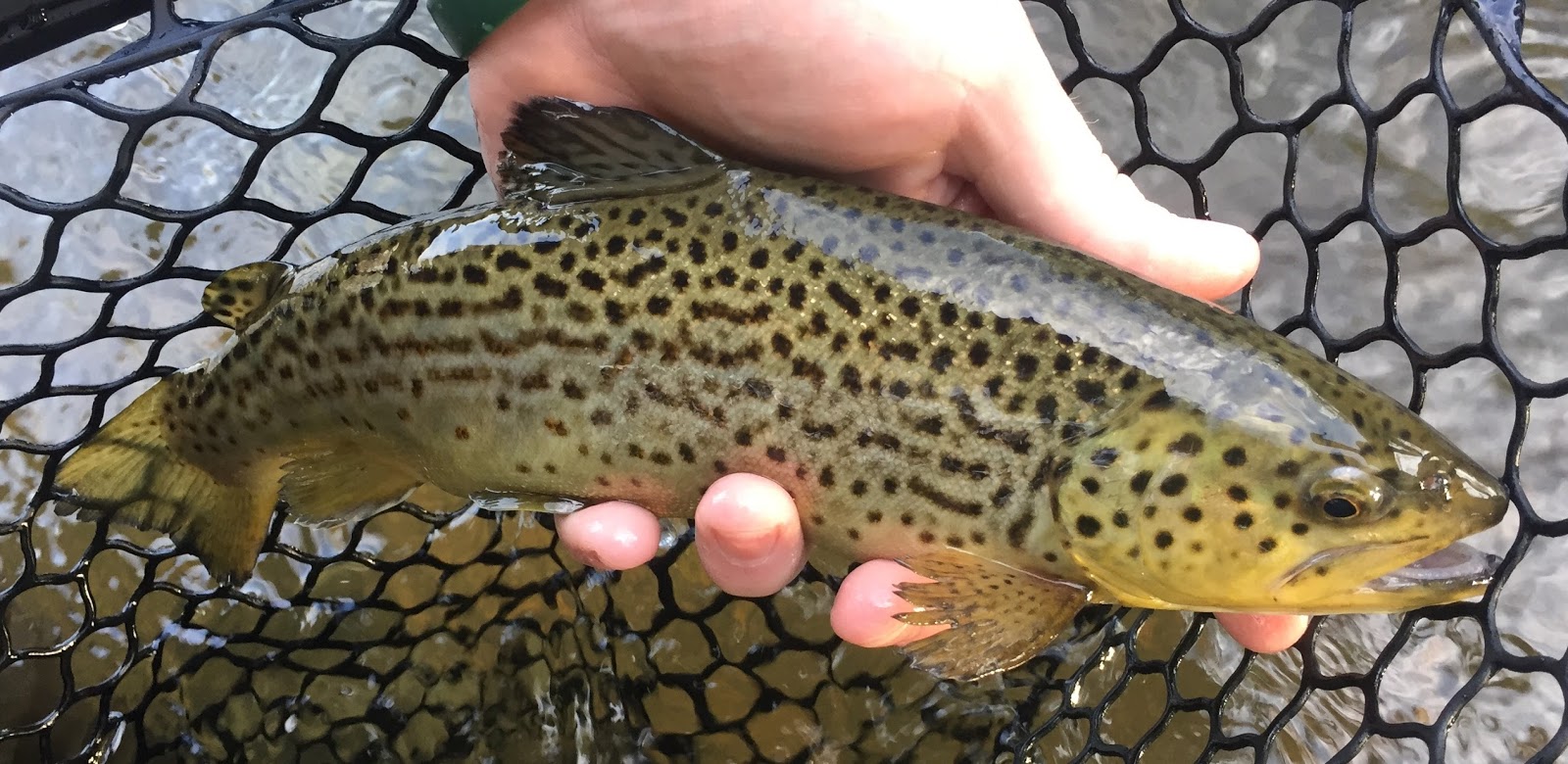
We have been very busy and my new company Relentless Fly Fishing has hit the ground running. With the other guys in the shops we have 6 guides on the water these days, and everyone is doing a great job. The trout have been willing to please, and the bugs have started to come off nicely. The Tully and Breeches have been fishing very well, we have seen caddis, for a while now, and the sulphurs have started as well.
The spring creeks have also been fishing very well, they are all low and super clear right now, but if your approach and presentation are good, you will be successful. We have been seeing some caddis on most of them, but the sulphurs are starting up and the fish have noticed.
Some of my favorite patterns for this have been the Dead Ringer caddis pupa, CDC Parachute Sulphur, CDC Caddis, CDC Bubble Back caddis, Split Back Sulphur Nymph, and more.
It has been a wonderful season so far, and we have plenty of openings and new offerings on the guide side. Please give the shops a call if you are interested in hearing about all we have to offer.
We have been very busy and my new company Relentless Fly Fishing has hit the ground running. With the other guys in the shops we have 6 guides on the water these days, and everyone is doing a great job. The trout have been willing to please, and the bugs have started to come off nicely. The Tully and Breeches have been fishing very well, we have seen caddis, for a while now, and the sulphurs have started as well.
The spring creeks have also been fishing very well, they are all low and super clear right now, but if your approach and presentation are good, you will be successful. We have been seeing some caddis on most of them, but the sulphurs are starting up and the fish have noticed.
Some of my favorite patterns for this have been the Dead Ringer caddis pupa, CDC Parachute Sulphur, CDC Caddis, CDC Bubble Back caddis, Split Back Sulphur Nymph, and more.
It has been a wonderful season so far, and we have plenty of openings and new offerings on the guide side. Please give the shops a call if you are interested in hearing about all we have to offer.
Saturday, June 23, 2012
Heat Warning - Tulpehocken Creek Report
This week started off a little slow for me. The fishing never really turned on, this could be due to a couple things. One in particular, water temps hit 71 degrees coming out of the dam, with reports of temps reaching 73 in the lower sections of the river. When the water temps are over 68 degrees PLEASE PLEASE PLEASE, be mindful of how long you fight your fish, the time of day you fish, and if you can, switch gears to Smallmouth or your favorite cold mountain stream.
When trout exert energy aka fight back when you hook them, they build up lactic acids in their muscles. If they cannot cool down after the fight due to high water temps, they will basically cook from the inside out and go belly up. Trout however can withstand relatively hot water temps, Rainbows into the mid 70s without being stressed and Browns in the lower 70s without being stressed. I believe that trout can even withstand some upper 70s temps if it does not stay that hot for an extended period of time.
I know most of you have heard all this before, but we are trying to keep a fish kill if any very low. Being aware of the temps, and conditions on your local streams can help save the fish. Thank You
Now onto a nicer subject... The Report.
The water temps have come down a bit with this last front, and the fish have been up on caddis the last 2 days. Reports earlier this week said Trico fishing was slow, thinking it was from this hot muddy water. Either way look for them to become more active the next couple days, looks like day temps will not be getting over 85, with low 70s in the extended forecast.
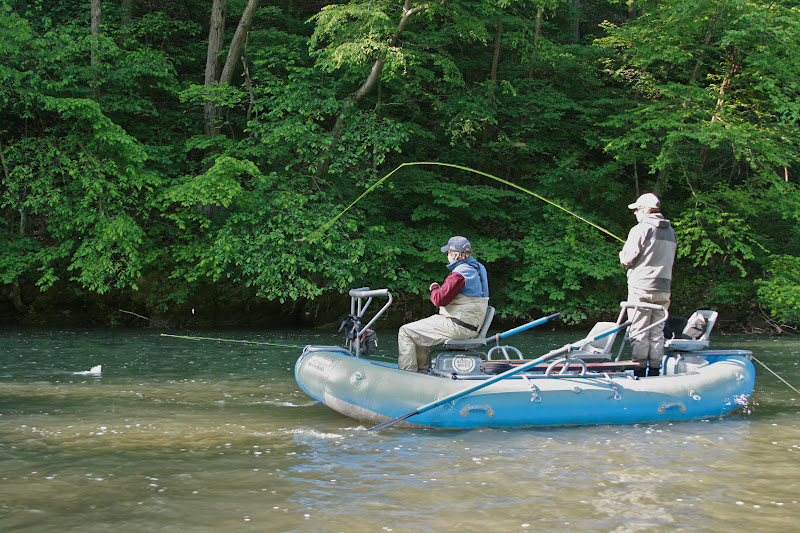
Here are a few pictures from a float we did just before the water dropped to 150cfs.
And a couple from last 2 trips. The water came down to about 67 degrees yesterday morning, so we continued as planned. Fishing was pretty good, the picture taking not so much. Tan and Green Caddis littered the water for about 3 hours, right before the rain it kinda slowed so we messed around with a couple nymphs an picked a couple nice rainbows up.
Hot Flies: CDC Caddis, Pheasant Tails, Drowned Trico, Woolly Bugger, Caddis Larva, CDC Sulphur
When trout exert energy aka fight back when you hook them, they build up lactic acids in their muscles. If they cannot cool down after the fight due to high water temps, they will basically cook from the inside out and go belly up. Trout however can withstand relatively hot water temps, Rainbows into the mid 70s without being stressed and Browns in the lower 70s without being stressed. I believe that trout can even withstand some upper 70s temps if it does not stay that hot for an extended period of time.
I know most of you have heard all this before, but we are trying to keep a fish kill if any very low. Being aware of the temps, and conditions on your local streams can help save the fish. Thank You
Now onto a nicer subject... The Report.
The water temps have come down a bit with this last front, and the fish have been up on caddis the last 2 days. Reports earlier this week said Trico fishing was slow, thinking it was from this hot muddy water. Either way look for them to become more active the next couple days, looks like day temps will not be getting over 85, with low 70s in the extended forecast.
Here are a few pictures from a float we did just before the water dropped to 150cfs.
And a couple from last 2 trips. The water came down to about 67 degrees yesterday morning, so we continued as planned. Fishing was pretty good, the picture taking not so much. Tan and Green Caddis littered the water for about 3 hours, right before the rain it kinda slowed so we messed around with a couple nymphs an picked a couple nice rainbows up.
| Last week I found this web full of Tricos |
Hot Flies: CDC Caddis, Pheasant Tails, Drowned Trico, Woolly Bugger, Caddis Larva, CDC Sulphur
Monday, June 11, 2012
Double Feature - Pheasant Tail & Para Sulphur Spinner
Well, now that I am back from Alaska, and no longer have Steelhead on my mind (thats only kinda true), I am back to the featured fly. Sense I was lacking in this before I left I decided to do another double feature. The featured flies I choose for this double feature are 2 that I use all the time, and should be in everyones boxes.
The first is just a basic Pheasant Tail, however this one is tied "in the round". This is a super simple and fast tie, and works well on any stream. The second is a CDC Parachute Sulphur Spinner, this little guy is one that I kinda came up with last year as an experiment and it worked wonders.
Step 2: Make a thread base, tying in the Ultra wire.
Step 2: Tie in 4 Mayfly Tails. Wrapping thread sung to the dubbing ball.
Step 3: Strip one CDC feather and stack it. Tie in forward, trim extra forming a small tapered body.
Step 4: Wrap the thread up the CDC, making a parachute post.
Step 5: Tie in Grizzly hackle for the legs/spent wing.
Step 6: Taking the thread back to the tails, dub the body forward. Keep as slim as possible.
Step 7: Wrap the hackle 2 times around the post. Tie off behind the hook eye.
Step 8: Whip finish, the cut the CDC post to the size you would like. Sometimes having just a slightly higher post can help see in low light.
The first is just a basic Pheasant Tail, however this one is tied "in the round". This is a super simple and fast tie, and works well on any stream. The second is a CDC Parachute Sulphur Spinner, this little guy is one that I kinda came up with last year as an experiment and it worked wonders.
Pheasant Tail - Round
Hook: TMC 2488 sz. 14-18
Thread: UNI Thread 6/0 - Black
Bead: Tungsten Bomb Bead sz. to make hook - Gold
Tail: Pheasant Tail Fibers
Body: Pheasant Tail Fibers
Rib: Ultra Wire Gold
Thorax: Ice Dub - Peacock
Step 1: Place Bead onto Hook.
Step 2: Make a thread base, tying in the Ultra wire.
Step 3: Pull 4 or 5 Peasant tail fibers off the tail feather. Make one wrap of thread over the pheasant tail fibers and adjust to length. Wrap thread forward.
Step 4: Wrap Pheasant tail fibers forward, leaving a small gape behind the bead.
Step 5: Wrap the Ultra wire forward, making a rib.
Step 6: Dub behind the bead, making a nice buggy thorax.
Step 7: Whip finish, and cut off.
CDC Parachute Sulphur Spinner
Hook: TMC 100 sz. 14 - 20
Thread: UNI Thread 8/0 Yellow
Tails: Mayfly Tails
Hot Butt: Sow Scud Dubbing - Big Horn Orange
Para Wing: Super Select CDC - White or Lt. Dun
Body: East Coast Dubbing - Sulphur Spinner (Tied with DRC)
2nd Wing: Whiting Grizzly Hackle
Step 1: Make a small orange egg sack with dubbing. This will help split the tails as well.
Step 2: Tie in 4 Mayfly Tails. Wrapping thread sung to the dubbing ball.
Step 3: Strip one CDC feather and stack it. Tie in forward, trim extra forming a small tapered body.
Step 4: Wrap the thread up the CDC, making a parachute post.
Step 5: Tie in Grizzly hackle for the legs/spent wing.
Step 6: Taking the thread back to the tails, dub the body forward. Keep as slim as possible.
Step 7: Wrap the hackle 2 times around the post. Tie off behind the hook eye.
Step 8: Whip finish, the cut the CDC post to the size you would like. Sometimes having just a slightly higher post can help see in low light.
Subscribe to:
Posts (Atom)