Showing posts with label Steelhead Streamers. Show all posts

Saturday, December 6, 2014

Featured Fly - Angry Leech 2.0

So, this fly came to mind only a few days ago. The base of many of my steelhead streamers come from the Starlite leech , which was my all time favorite streamer when I was guiding in Alaska. The Great Lakes Angry Leech that I did last winter was my variation of the startlite without the chenille egg as the head. So this variation came about when I decided to add the "egg" back to it, by using a different color rabbit loop on the front. This will add nice movement to a swung or stripped fly. The startlite leech was a great steelhead and salmon fly in Alaska, and the first steelhead I landed on the Salmon River was also on the Starlite. I am excited to try its cousin, the Angry Leech 2.0, out this weekend on the Salmon.

Materials:
Hook: Senyo Shanks - 40mm
Trailer Hook: Daiichi 2557 - sz 4
Trailer Hook Wire: Senyo's Trailer Hook Wire 
Tail: Rabbit Zonker - Black, Purple, White 
Body: Estaz - Same as Rabbit 
Collar 1: UV Polar Chenille - Orange, Pink, Chart.
Legs: Sili Legs - Same as Polar Chenille 
Collar 2: Rooster Saddle or Guinea - Orange, Pink, Chart.
Eyes: Senyodelic Bead Chain Eyes - Blue 
Head: Rabbit Dubbing Loop - Same as Tail 
Hot Head: Rabbit Dubbing Loop - Orange, Pink, Chart.

Step 1: Leaving about 3/4" loop off the back, tie in the trailer wire. Adding head cement or super glue to help secure the wire.


Step 2: Tie in the bead chain eyes, you will see later why there are four total instead of just two.


Step 3: Take the thread back to the loop, tie in the rabbit zonker, secure and move thread forward two wraps.


Step 4: Tie in the estaz and wrap the thread forward.


Step 5: Wrap the estaz forward, leaving about a 1/4" between the eyes and the estaz.


Step 6: Tie in and wrap the UV Polar Chenille 4 times. This will add a nice accent of flash to the streamer.


Step 7: Tie in the tips of the rubber legs, forming a nice loop.
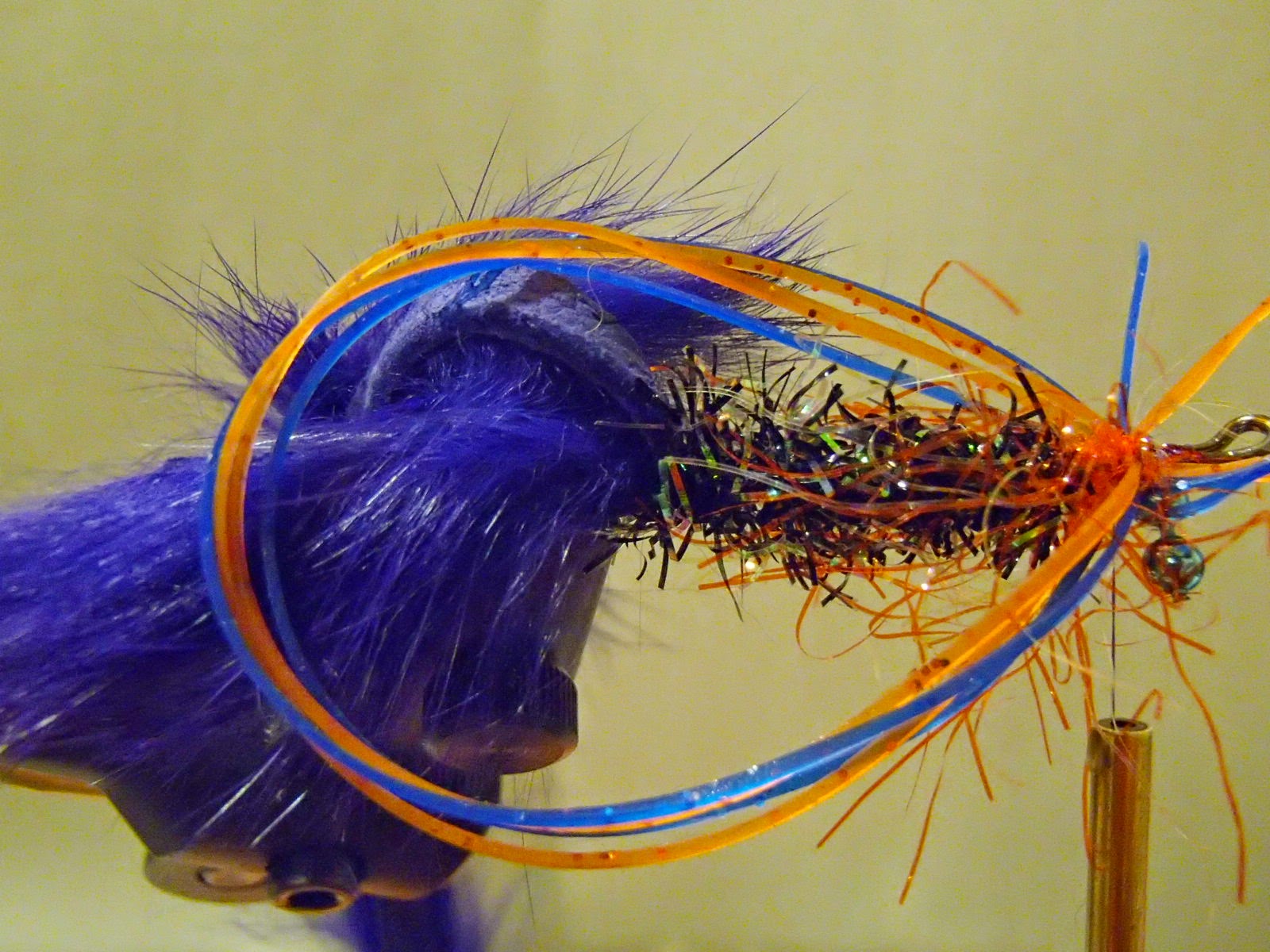

Step 8: Trim the legs to the desired length.


Step 9: Tie in the Guinea feather tip first. 


Step 10: Make several wraps of the guinea feather until the stem gets too thick. 


Step 11: Bring the rabbit strip forward, tying it in just in front of the eyes


Step 12: Once you trim the extra rabbit off, make a dubbing loop of the same color rabbit.


Step 13: Wrap the loop, once behind the bead eyes, then figure 8 around the eyes, finishing in front of the eyes.


Step 14: Make one more loop with the chosen pop color.


Step 15: Make two or three wraps in front of the purple head.


Step 16: Whip finish and Cut off.


Finished Fly:

Awesome Great Lakes Steelhead Fly


Wild Alaska Steelhead, that fell to the Starlite Leech
Alaskan Steelhead


Wednesday, November 6, 2013

Tube Flies - Advantage

Well my fishing has been on hold for a couple weeks now, high water around the great lakes has kept me home this last weekend. Besides a half day on the Salmon River, hooking 2 fish and landing 0, and a local trout trip to Valley creek, I have spent most of my time the past 2 weeks at the vise. For the past 3 or so years, I've become very fond of tube flies, from steelhead to trout, I think they give you a huge advantage. I was surfing the web checking out new patterns, and new technology for this form of fly tying, when I came across this little write up from HMH Vises. These guys make some awesome tools for tubes, and have some great styles of tubes, simple and easy to use. So if you have been thinking about getting into tube flies, check out this list of advantages from HMH, then stop by the shop and we can get you all set up. Or just check the back blog for some tubes Ive tied up.


Tube Flies have real advantages over conventional flies:


·       Pattern size and style aren’t dependent on hook size or style.

·       Hook can be placed further back in the pattern resulting in more hook ups.

·       Many tube choices - including weight, color, size, shape and length options.

·       Less hook leverage with shorter shank tube hook when fighting fish resulting in more landed fish.

·       Fly slides up leader and away from sharp teeth during fight.

·       If hook breaks or dulls simply replace it.

·       Many hook choices including treble, double and single.

·       Change easily from barbed or barbless.

·       Can use non stainless hooks in saltwater.

·       Incorporate cones and beads to add and adjust weight of flies.

·       Tie convertible flies – mix and match tailing material.


Great Lakes Steelhead that feel to a Leech Tube Fly
Variation of a classic, Green Butt Bunny Skunk
Tube Fly Sculpin Pattern