Finally had the chance (and motivation) to edit a short video of the Double Squirrel nymph. This has become a staple in my box as well as many of the other guides in the area. It is a simple and easy fly to tie that will look like many different bugs. I will tie them in black with Chartreuse hot spots, and dark browns with a pink hot spot. These bugs can be tied as small or as large as you would like. My favorite sizes are 16 and 14, however I do tie them up to a size 8 for a heavy anchor fly and down to 18 when the water is low and clear.
Showing posts with label Nymph Fly Pattern. Show all posts
Wednesday, December 19, 2018
Monday, January 26, 2015
Featured Fly - Thread Body Olive Nymph
Winter time around a tailwater means it's time to fill the fly boxes with BWO Nymphs and Midge Larvae. This little wonder would fall under the BWO category. It is a very simple fly that only takes a couple materials. I have fished it on local small streams around the shop and the little wild trout love it.
Step 1: Make a small thread base behind the bead.
Step 2: Make a tight thread base all the way to the bend of the hook. Tie in the ultra wire as you go.
Step 3: Grab about ten CDL fibers and tie in.
Step 4: Wrap the thread forward over top the CDL fibers. This helps as a little bulk to the body.
Step 5: Wrap back towards the bend of the hook, stop short and bring the thread forward, repeat this step a few times. This will make a slight tapered body out of the thread.
Step 6: Wrap the Ultra Wire forward, making a nice even rib.
Step 7: Dub the thorax, making about 3 wraps of Ice Dub.
Step 8: Whip finish and cut thread.
Finished Fly:
Materials:
Hook: TMC 102Y sz. 18 - 22
Bead: Tungsten Bomb Bead - Black
Thread: 8/0 UNI Thread - Olive Dun
Rib: Ultra Wire sz. Small - Black
Tail: CDL Feathers
Body: UNI Thread - Olive Dun
Thorax: Ice Dub - UV Dark Olive
Step 1: Make a small thread base behind the bead.
Step 2: Make a tight thread base all the way to the bend of the hook. Tie in the ultra wire as you go.
Step 3: Grab about ten CDL fibers and tie in.
Step 4: Wrap the thread forward over top the CDL fibers. This helps as a little bulk to the body.
Step 5: Wrap back towards the bend of the hook, stop short and bring the thread forward, repeat this step a few times. This will make a slight tapered body out of the thread.
Step 6: Wrap the Ultra Wire forward, making a nice even rib.
Step 7: Dub the thorax, making about 3 wraps of Ice Dub.
Step 8: Whip finish and cut thread.
Finished Fly:
Saturday, May 10, 2014
Tully Report - It's Spring
Judging by the weather yesterday, mixed with the 10 day forecast, I'd say we about skipped spring and went right to summer. They are calling for high 70's to mid 80s over the next few days, the only good thing I can come up with is, Caddis and warmer water. Fishing yesterday in cold, muddy, and high water, was relatively productive.
Shane (the new guy), Rob and I hit the Tully for a couple hours before work, the water was still high, but wadable, and the water was a bit on the muddy side. Despite all that, fish were rising in the soft water along the banks, and in slower seams where two currents came together. There were tan and grey caddis flying around, and I even saw a couple dropping eggs. So with this HOT not warm weather coming, this should be the perfect jumpstart to an awesome caddis hatch!
HOT FLIES: Caddis Larva, Z Wing Caddis, San Juans, and White Streamers
Shane (the new guy), Rob and I hit the Tully for a couple hours before work, the water was still high, but wadable, and the water was a bit on the muddy side. Despite all that, fish were rising in the soft water along the banks, and in slower seams where two currents came together. There were tan and grey caddis flying around, and I even saw a couple dropping eggs. So with this HOT not warm weather coming, this should be the perfect jumpstart to an awesome caddis hatch!
HOT FLIES: Caddis Larva, Z Wing Caddis, San Juans, and White Streamers
Tuesday, December 17, 2013
Featured Fly - BWO Nymph
Here is another great fly from the latest issue of Fly Tyer, I saw it and immediately grabbed all the materials to tie it. I have fished it a few times this winter, and it has performed will. Whether there is a full on olive hatch, or you know know that there is olives in the system, make this one of your first picks this winter.
Step 2: Tie in a single strand of shaggy dub, making a V for the tails.
Step 3: Tie in the Biot, then wrap your thread half way back to the hook eye.
Step 4: Wrap the Biot forward.
Step 5: Tie in the Scud back, for the shell case.
Step 6: Tie in one strand of shaggy dub on each side of the fly.
Step 7: Dub the thorax.
Step 8: Pull the scud back forward, and tie off.
Step 9: Whip finish and cut off.
Finished Fly:
Materials:
Hook: TMC 2488 - 16-20
Thread: UNI Thread 6/0 - Olive
Tail: Senyo's Shaggy Dub
Abdomen: Turkey Biot - Olive
Thorax: Superfine Dubbing - Olive
Wing Case: Scud Back - Black
Legs: Senyo's Shaggy Bug
Step 1: Make a thread base.
Step 2: Tie in a single strand of shaggy dub, making a V for the tails.
Step 3: Tie in the Biot, then wrap your thread half way back to the hook eye.
Step 4: Wrap the Biot forward.
Step 5: Tie in the Scud back, for the shell case.
Step 6: Tie in one strand of shaggy dub on each side of the fly.
Step 7: Dub the thorax.
Step 8: Pull the scud back forward, and tie off.
Step 9: Whip finish and cut off.
Finished Fly:
Thursday, September 6, 2012
Featured Fly - Biot Body Nymph
Here is a little pattern that I came up with a while back, while looking online at a bunch of attractor nymphs. It is very simple, and fast to tie, and after a few years of guiding I've realized the fast and simpler the fly is, the less pissed I get when they get hung up in a tree or on the bottom. Ok pissed might be an exaggeration, but you get the idea. Simple and Fast is my new motto.
Step 2: Tie in the Ultra Wire.
Step 3: Tie in about 5 CDL Fibers.
Step 4: Tie in the Goose Biot.
Step 5: Wrap the biot forward leaving about a hook eye gap behind the bead.
Step 6: Wrap the Ultra Wire, using the biot edges as a guide.
Step 7: Dud the Thorax.
Step 8: Whip Finish, or add hot collar then whip finish.
Materials
Hook: TMC 2488 sz. 14-18
Thread: UNI Thread 6/0 Fl. Orange
Bead: Tungsten Bomb Bead
Tail: CDL Feathers
Body: Goose Biot - Brown, Black, Amber, Olive
Rib: Ultra Wire - Gold, Black, Olive
Thorax: Hare's Ice Dub - Peacock, Brown, Black
Step 1: Make a thread base just past the bend in the shank.
Step 2: Tie in the Ultra Wire.
Step 3: Tie in about 5 CDL Fibers.
Step 4: Tie in the Goose Biot.
Step 5: Wrap the biot forward leaving about a hook eye gap behind the bead.
Step 6: Wrap the Ultra Wire, using the biot edges as a guide.
Step 7: Dud the Thorax.
Step 8: Whip Finish, or add hot collar then whip finish.
Friday, March 2, 2012
Featured Fly - Tooth Decay
This is a fly that was featured in Fly Tyer magazine this past summer. This fly has been very effective for me during high and off colored water. The hot orange butt gives something "extra" for trout to look at. I tie this fly in 3 different body colors: Olive Yellow, Brown, and Black. The olive and brown bodied ones work very well when BWOs are present.
Materials
Hook: TMC 3761 - sz. 14-18
Bead: Copper - to match hook size
Thread: Olive Yellow
Tail: Wood duck or Coq de Leon
Body: Tying Thread
Thorax: SLF Red Fox Squirrel Nymph Thorax
Wing Case: Med Holo. Tinsel - Black
Rib: Ultra Wire - Copper
Hot Spot: 6/0 UNI Thread - Fire Orange
Body: Tying Thread
Thorax: SLF Red Fox Squirrel Nymph Thorax
Wing Case: Med Holo. Tinsel - Black
Rib: Ultra Wire - Copper
Hot Spot: 6/0 UNI Thread - Fire Orange
Step 1: Start by making a small thread base. Tie in a 6 - 8 lemon barred wood duck fibers.
Step 2: Tie in Ultra wire to the start of the "Hot Spot", Wrap thread forward making a tapered body
Step 3: Wrap the wire forward making a rib.
Step 4: Tie in the Holo flashe for the shell back.
Step 5: Dub the thorax.
Step 6: Pull shell back forward and tie off behind the bead.
Step 7: Whip finish.
Finished Fly
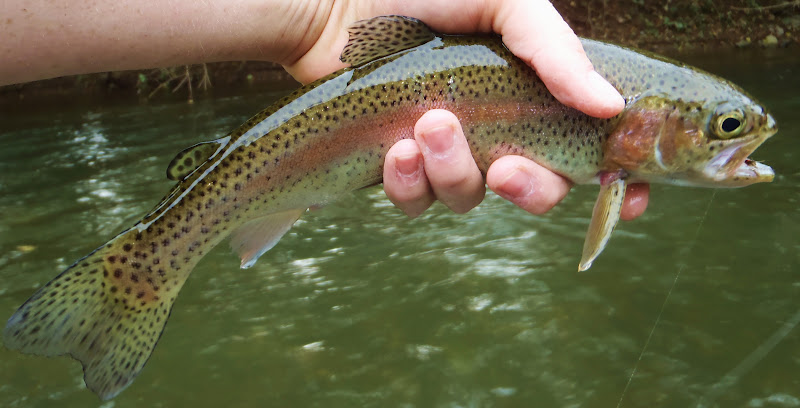
This fish fell to the Tooth Decay after flows well over 3,000cfs.
Subscribe to:
Posts (Atom)